



Last updated: August 2026 | Written by Ashish Kumar, Founder at BusinessBuilts
Saving money used to mean a piggy bank and a lot of willpower. Now it happens mostly on your phone, through the apps you already use every day. Most people don’t realize how much of their monthly leakage happens quietly, a forgotten subscription here, a slightly-worse savings account there. None of it feels like a big deal in the moment, which is exactly why it adds up unnoticed.
This guide breaks down exactly how to save money online in 2026, whether you’re a student trying to stretch a small allowance, a working professional planning your salary better, or a parent trying to trim the monthly household budget. No generic filler, just practical money saving tips you can actually do today.
How to Save Money Online in 2026: What It Actually Means
Saving money online isn’t just about hunting for coupon codes anymore. It covers everything you do digitally with your money: how you bank, how you shop, how you invest, and how you track what’s coming in and going out.
For someone in India today, that means using UPI wisely, picking the right digital savings account, automating small investments through SIPs, and avoiding the traps that come with easy credit like Buy Now Pay Later. Done right, these small digital habits add up to real savings every single month, often without you feeling like you’re sacrificing anything.
The rest of this guide walks through each of these areas one by one.
Track Your Spending Before You Save
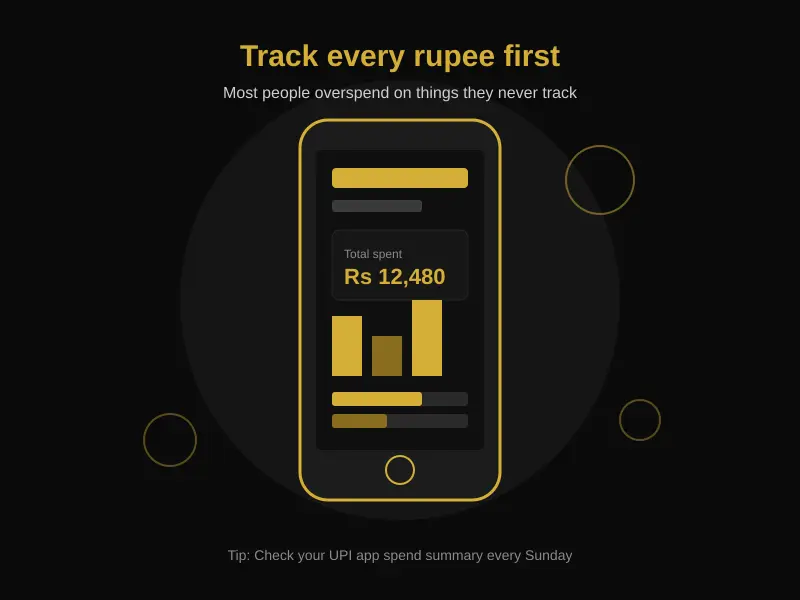
You cannot fix a leak you cannot see. Before cutting anything, spend one week just watching where your money actually goes. Most people are surprised by how much disappears on food delivery, small UPI payments, and subscriptions they forgot about.
What to do:
- Use your UPI app’s built-in spend tracker. Google Pay, PhonePe, and most bank apps now show a monthly breakdown by category automatically.
- If you want more detail, try one of the many budgeting apps available that link to your bank account and sort spends into categories like groceries, travel, and shopping.
- Old school works too. A simple spreadsheet with just three columns, date, amount, and category, takes five minutes a day to fill in.
Once you know your numbers, everything else on this list becomes easier because you’re no longer guessing.
Try it yourself: Use our free budget planning calculator to see exactly where your money is going and how much you could save each month.
Smart Banking Moves to Save Money Online
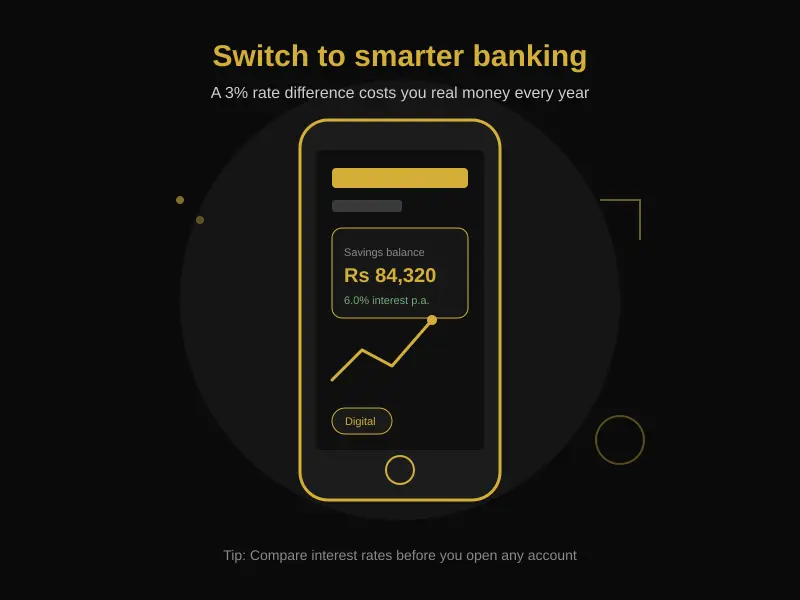
Your bank account itself can either help you save or quietly work against you. A lot of people stick with the same account for years without checking if a better option exists.
Where to look:
- Digital savings accounts from smaller banks and neobanks often offer higher interest rates than traditional big bank savings accounts, sometimes 1 to 2 percent more per year.
- Auto-sweep facilities move any balance above a set limit into a fixed deposit automatically, so idle money in your savings account still earns FD-level interest.
- Zero-balance digital accounts cut out the minimum balance penalty that many people pay every month without realizing it.
Say you keep an average balance of ₹50,000 in a savings account earning 3 percent versus one earning 6 percent. That difference alone is ₹1,500 extra a year, for doing nothing except picking the right account.
Before switching, compare at least two or three digital banking apps side by side on interest rate, minimum balance rules, and hidden charges. New to online banking? Read our guide on digital banking accounts explained before you switch.
Cashback and Coupon Strategies That Actually Work
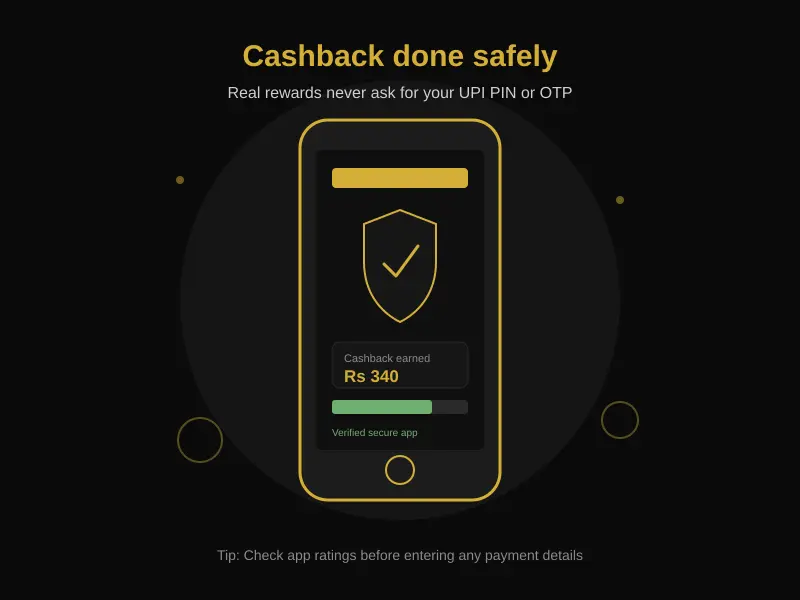
Cashback apps are everywhere, but not all of them are worth your time, and some are outright unsafe. This is one area where being careful matters as much as being smart.
How to do it safely:
- Stack rewards. If your credit card gives 2 percent cashback and a shopping app adds another 5 percent, use both on the same purchase for a combined saving.
- Check app ratings and reviews before entering any payment details. A cashback app with under 4 stars or very few downloads is a risk not worth taking.
- Never share your UPI PIN or OTP with any app or person claiming to process your cashback. Legitimate cashback is always credited automatically, it never requires you to “verify” by entering a PIN.
A common trap: fake cashback apps promise huge returns like 50 percent off, then ask you to enter UPI credentials to “receive” the amount. This is a classic fraud pattern. Real cashback platforms never need your PIN to give you money, only to take it. For official guidance on staying safe, check the RBI’s page on digital payment security before trusting any new payment app.
Treat any offer that sounds unusually generous as a reason to double check, not a reason to rush.
SIP and Micro-Investing: Save While You Grow Wealth Online
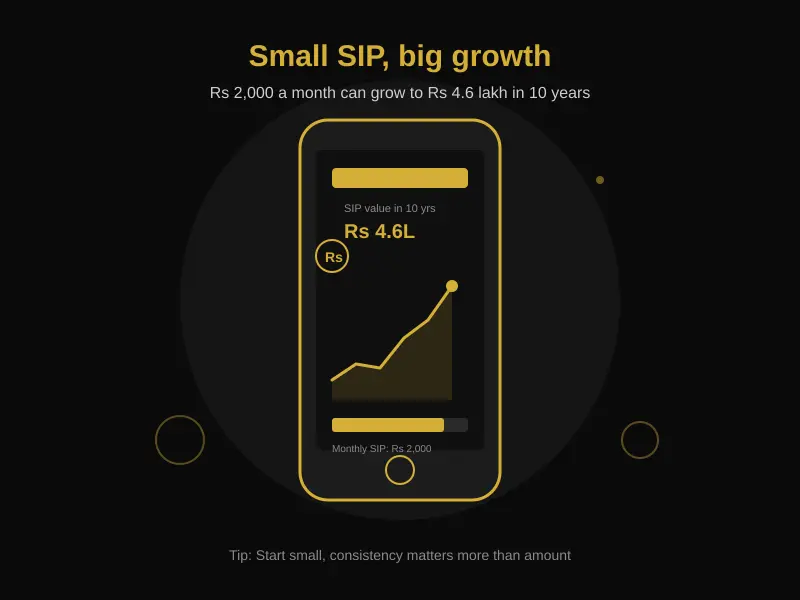
Saving money isn’t just about spending less, it’s also about making the money you do save work harder. This is where small, consistent investing beats keeping cash idle in a savings account.
What beginners should know:
- A Systematic Investment Plan, or SIP, lets you invest a fixed amount every month into a mutual fund. You don’t need a lump sum to start, many platforms allow SIPs starting at ₹500 a month.
- Round-up investment apps take the spare change from your daily UPI transactions and invest it automatically. Spend ₹47 on chai, ₹3 gets invested.
- The real power here is compounding. A ₹2,000 monthly SIP earning an average 12 percent return over 10 years grows to roughly ₹4.6 lakh, even though you only put in ₹2.4 lakh yourself.
If you’re not sure where to start, use our SIP calculator to see how your own monthly amount could grow over time. It takes thirty seconds and gives you a real number to work toward instead of a vague goal. Once you’re comfortable with SIPs, you can explore the best mutual funds to invest in this year to match your risk appetite and goals. For unbiased investor education on how mutual funds work, SEBI’s investor awareness page is a solid starting point.
Cut Subscription and Recurring Payment Waste
Subscriptions are designed to be forgotten. That’s exactly why they quietly drain your account month after month.
How to take control:
- Open your UPI app and check “Manage Mandates” or “Autopay.” This shows every recurring payment linked to your account, including ones you may have completely forgotten about.
- Cancel anything you haven’t used in the last 60 days. If you’re not sure, pause it instead of canceling outright, most services let you resume anytime.
- For subscriptions you do want to keep, check if a family or shared plan works out cheaper per person than everyone paying individually.
Most people find at least one or two forgotten subscriptions when they actually look. Even ₹199 a month adds up to almost ₹2,400 a year for something you’re not using.
Safe Online Shopping Habits That Save Money
Online shopping can save you money or quietly cost you more, depending on how you approach it. Sales and flash discounts are designed to create urgency, and that urgency often leads to poor decisions.
Smarter shopping habits:
- Use a price comparison browser extension before checkout. These tools show you the price history of a product, so you can tell if a “sale” price is actually lower than what it sold for last month.
- Set price-drop alerts on products you want but don’t need immediately. Many shopping apps let you save an item and get notified when the price falls.
- Watch for dark patterns like countdown timers that reset, “only 2 left in stock” messages that never change, or hidden delivery charges added at the last step.
During major sale events, always add items to your cart and wait 24 hours before buying. If it’s still in stock and the price hasn’t changed, it wasn’t really a limited deal in the first place.
Money-Saving Strategies by Life Stage
Not everyone saves money the same way, because not everyone has the same income, expenses, or goals. Here’s how to apply everything above based on where you are in life.
For students: Look for student-specific UPI and banking offers, many apps give extra cashback or zero fees for verified students. Avoid Buy Now Pay Later for anything that isn’t essential, the convenience fee and late charges add up fast on a limited allowance.
For working professionals: Maximize your savings by exploring tax-saving investment options like ELSS mutual funds or PPF under Section 80C, these reduce your taxable income while building savings. Check what your employer offers too, many companies provide salary account perks like fee waivers and preferential loan rates that go unused.
For families managing a household: Set up autopay for utility bills through apps that offer a small discount for on-time digital payment. If you have a joint account, use a shared expense tracker or one of the many budgeting apps built for households, so both partners can see spending patterns instead of guessing at the end of the month. Once your savings are on track, insurance planning basics are worth looking into next to protect what you’ve built.
For freelancers and online sellers: Keep GST invoicing simple with our GST invoicing tools guide rather than manual spreadsheets, this saves time and reduces costly filing errors. Combine cashback stacking with business expense tracking so you’re saving on purchases while also keeping clean records for tax season.
Common Online Saving Mistakes to Avoid
Even people trying hard to save money online fall into a few repeated traps. Knowing them in advance means you can skip them entirely.
- Chasing rewards over actual savings. Buying something you didn’t need just because it had cashback means you still spent money, you didn’t save it.
- Ignoring BNPL and EMI hidden charges. A “0 percent interest” EMI plan can still carry processing fees or late payment penalties that make it more expensive than paying upfront.
- Not reading auto-renewal terms. Many free trials convert to paid subscriptions automatically. Set a calendar reminder a day before any trial ends.
- Trusting offers that feel too good. If a deal seems designed to make you act fast without thinking, that’s usually the point. Slow down and verify.
FAQs About Saving Money Online
Is it safe to save money using apps?
Yes, as long as you stick to apps with strong reviews, proper RBI or SEBI registration where applicable, and never share your UPI PIN or OTP with anyone, including apps claiming to process rewards.
What is the best way to save money online in India?
There’s no single best way, it depends on your income and goals. A combination usually works best: track your spending, pick a high-interest digital savings account, start a small SIP, and cut unused subscriptions.
How much should I save from my salary every month?
A common starting point is the 50-30-20 rule, 50 percent for needs, 30 percent for wants, and 20 percent for savings and investments. Adjust the percentages based on your actual expenses and goals.
Are cashback apps trustworthy?
Most well-known cashback apps are legitimate, but always check ratings, avoid apps asking for your PIN or OTP, and be cautious of offers that promise unusually high returns.
Can students save money without earning?
Yes. Saving isn’t only about income, it’s also about habits. Using student discounts, avoiding unnecessary BNPL purchases, and tracking small daily spends can free up meaningful money even on a limited allowance.
Online paise kaise bachaye without any risk?
Sabse safe tarika hai apna spending track karna, ek achha digital savings account choose karna, aur kabhi bhi kisi app ko apna UPI PIN ya OTP share na karna. Chhoti SIP se investment start karna bhi ek smart move hai.
Kya cashback apps trust karna safe hai?
Zyadatar popular cashback apps safe hote hain, lekin hamesha app ki rating check karo aur agar koi offer bahut zyada attractive lage to ek baar zaroor verify kar lo. Genuine cashback ke liye kabhi bhi PIN ya password nahi manga jaata.
Beginners ke liye sabse achha online saving tarika kya hai?
Pehle apna monthly kharcha track karo, phir ek high interest wala digital savings account choose karo, aur ₹500 se SIP start kar do. Yeh teen steps hi zyadatar log follow karke consistent savings build karte hain.
Final Thoughts
Saving money online in 2026 isn’t about one big change, it’s about stacking small, consistent habits: tracking spends, picking the right accounts, investing a little every month, and staying alert to scams disguised as deals. That’s the real answer to how to save money online, small habits, stacked consistently. Start with one or two strategies from this list, get comfortable with them, and add more as you go. That’s how real savings build up, one smart decision at a time.
Start Saving Smarter Today
You don’t need a big salary or complicated spreadsheets to start saving, you just need the right tools and a plan you’ll actually stick to.
- Calculate your SIP returns with our free SIP Calculator and see how a small monthly investment grows over time.
- Plan your monthly budget with our free Budget Planning Calculator and find out exactly how much you can save starting this month.
- Explore more money-saving guides on BusinessBuilts to keep building smarter financial habits, one article at a time.
Disclaimer
This article is for general informational and educational purposes only and does not constitute financial, investment, tax, or legal advice. Savings strategies, interest rates, and investment returns mentioned here are illustrative and subject to change based on market conditions and individual financial products. BusinessBuilts does not endorse any specific app, platform, or financial institution mentioned in this article. Please consult a certified financial advisor or chartered accountant before making any financial or investment decisions based on your personal circumstances.
About the Author
Written by Ashish Kumar, Founder at BusinessBuilts
This article is researched and written by the BusinessBuilts editorial team, dedicated to breaking down business, finance, and investment topics into practical, easy to follow guidance for Indian readers. Our content is regularly reviewed and updated to reflect current banking practices, digital payment guidelines, and personal finance trends in India.
Have a question or a topic you’d like us to cover? Reach out through our Contact Us page, we’d love to hear from you.
